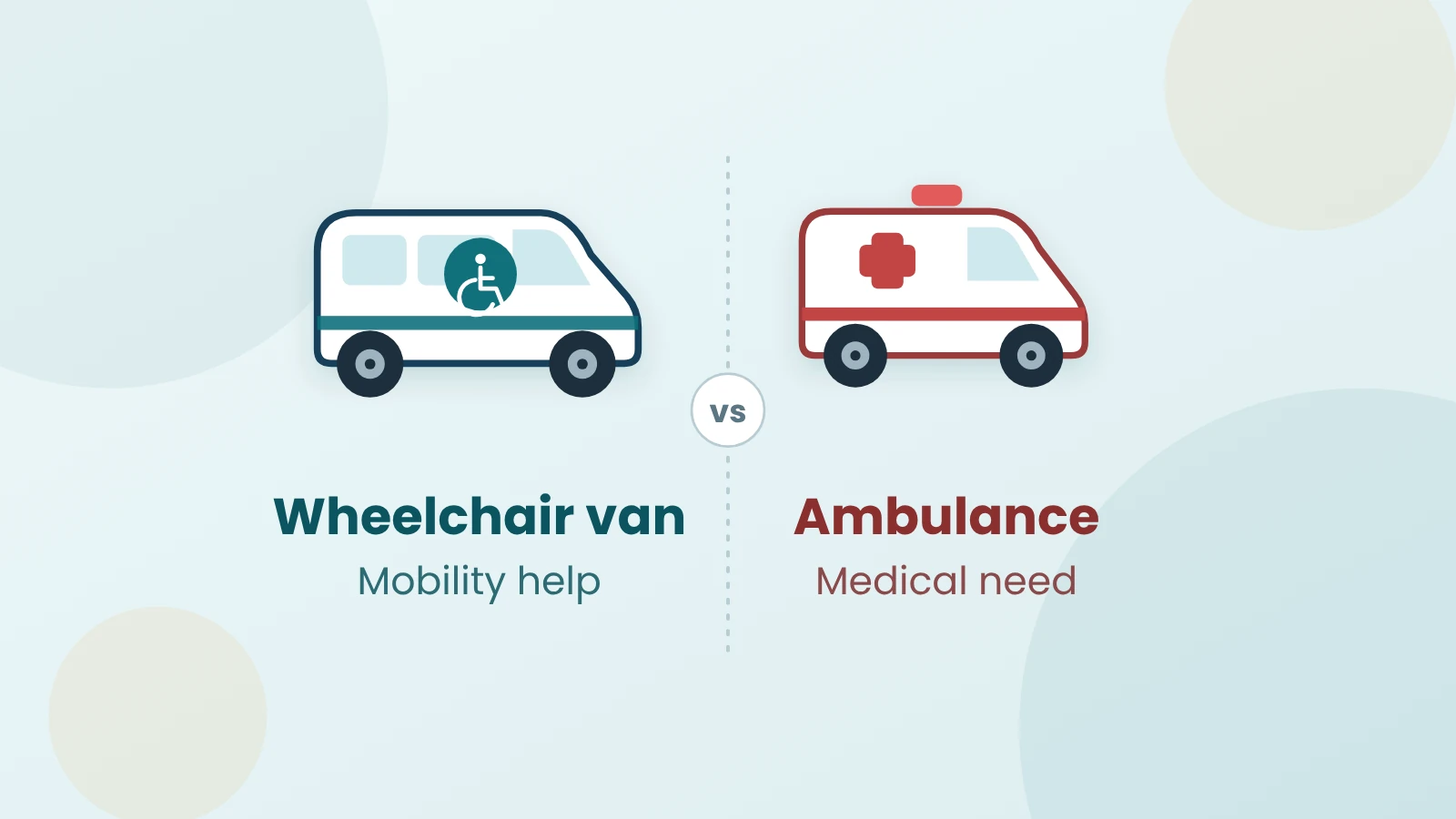
When someone has difficulty getting to a medical appointment, families sometimes assume that an ambulance is the only transportation option.
That is not always the case. Wheelchair-accessible non-emergency transportation and ambulance transportation serve different passenger needs.
What Is Wheelchair-Accessible Non-Emergency Transportation?
Wheelchair-accessible non-emergency transportation is intended for passengers who need accessible transportation but are not experiencing a medical emergency requiring ambulance-level care.
An accessible vehicle may include a ramp or lift, a designated wheelchair position, and equipment designed to secure the wheelchair during transportation.
When Might an Ambulance Be Necessary?
Ambulances are designed for patients whose medical condition requires a higher level of transportation assistance or medical care.
Medicare, for example, states that ground ambulance transportation may be covered when traveling in another type of vehicle could endanger the patient's health and medically necessary ambulance transportation is required.
Using a wheelchair by itself does not automatically mean that a passenger requires an ambulance. The passenger's medical condition and transportation needs are important factors.
Questions to Consider Before Scheduling Transportation
Before arranging transportation, patients and caregivers should consider several questions:
- Can the passenger safely remain seated in a wheelchair during the trip?
- Does the passenger require medical monitoring during transportation?
- Does the passenger need medical treatment while traveling?
- Can the passenger safely enter and exit an accessible vehicle?
- Does the passenger need stretcher transportation?
- Are there stairs or other accessibility barriers at the pickup location?
- Does the passenger require assistance beyond what a non-medical transportation driver can safely provide?
If there is uncertainty about the passenger's medical condition, contact the passenger's healthcare provider for guidance about the appropriate level of transportation.
Why Wheelchair Securement Matters
Wheelchair-accessible transportation involves more than simply having enough room inside the vehicle for a wheelchair.
Appropriate wheelchair securement equipment helps keep the mobility device within its designated position during transportation. Accessibility regulations applicable to covered transportation services also address assistance with ramps, lifts, and wheelchair securement systems.
Passengers should provide information about their wheelchair or mobility device when scheduling transportation so the provider can determine whether its vehicle and equipment can safely accommodate the passenger.
Wheelchair Transportation Is Not the Same as Stretcher Transportation
A wheelchair-accessible van should not automatically be considered a stretcher vehicle.
A passenger who must remain lying down, cannot safely travel while seated, requires medical monitoring, or requires another level of assistance may need a different type of transportation.
Always discuss these requirements with the transportation provider before booking.
What If the Passenger Uses Oxygen?
Using supplemental oxygen does not by itself determine whether a passenger requires ambulance transportation. However, transportation providers need to know about oxygen equipment and other medical or mobility needs before accepting a trip.
If a passenger requires active medical treatment, monitoring, or assistance beyond the scope of non-emergency passenger transportation, consult the passenger's healthcare provider regarding an appropriate transportation service.
Choosing the Appropriate Transportation
For many people who use wheelchairs but do not require emergency medical care, wheelchair-accessible non-emergency transportation can provide a practical option for reaching medical appointments and other destinations.
Patients whose medical condition requires ambulance-level transportation should use an appropriately equipped and staffed ambulance service.
Wheelchair Transportation in Central Florida
Leyland Transport serves Central Florida residents who need non-emergency transportation. Before scheduling, we encourage passengers and caregivers to explain mobility requirements, accessibility concerns, and any special transportation needs.
Learn about Leyland Transport services or request transportation online.
For additional questions, visit our Frequently Asked Questions or contact us.